
Material Segregation
First, dedicated storage areas and suitable contact surfaces can reduce cross-contamination risk.
Stainless steel pipe spools from Mesta Inc. are manufactured to approved drawings, piping classes and project specifications. Consequently, controlled material handling, welding, inspection, surface treatment and documentation support the specified corrosion performance and installation requirements.
A stainless steel pipe spool combines pipe with drawing-defined fittings, flanges, branches or attachments as one identified assembly. A fabrication team prepares it before site installation. Therefore, project teams can control material identity, weld production, dimensional inspection and surface condition under a planned workflow.
Stainless steel does not represent one universal material. Instead, each grade responds differently to corrosion media, chloride exposure, temperature, fabrication heat and cleaning chemicals. The piping material specification must select the grade; the fabricator should not substitute one based only on a general “SS” description.
Mesta Inc. produces made-to-drawing spool packages for industrial projects. For general manufacturing activities, explore our fabricated pipe spools. Additionally, the pipe spool drawing page explains the dimensions, item references and weld information that guide production.
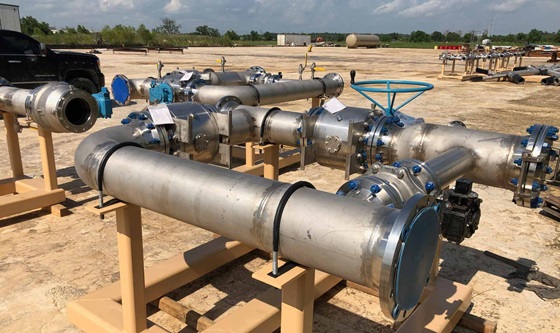
Grade selection for stainless steel pipe spools should follow the process media and design conditions. For example, temperature, chloride concentration, acidity, crevices, cleaning regime, pressure and fabrication requirements can all influence suitability.
| Grade family | General characteristics | Items the project must evaluate |
|---|---|---|
| 304 / 304L | For example, these common austenitic grades suit many general process and utility applications; the low-carbon grade supports welded fabrication strategies. | Media chemistry, temperature, cleaning method, chloride exposure and post-weld condition |
| 316 / 316L | In comparison, these molybdenum-bearing austenitic grades improve resistance in many environments compared with 304-family grades. | Chloride level, temperature, stagnant zones, crevices, finish and stress-corrosion risk |
| 321 | Similarly, this titanium-stabilized austenitic stainless steel suits selected elevated-temperature or post-weld service conditions. | Design temperature, time at temperature, welding procedure and code requirements |
| 347 | Likewise, this niobium-stabilized austenitic grade applies to selected high-temperature and welded applications. | Thermal cycle, service environment, filler selection and heat-treatment requirements |
| 904L | Moreover, this high-alloy austenitic stainless steel may suit demanding corrosive environments. | Verified corrosion data, availability, qualified welding procedures and project economics |
| Duplex / super duplex | However, these two-phase stainless families need service-specific review for strength and resistance in chloride-bearing environments. | Heat input, interpass temperature, filler, purge, ferrite balance and qualified procedures |
Material note: This table provides general guidance only. A qualified materials or corrosion engineer must select the final grade for the actual fluid composition, pressure, temperature, fabrication route and expected operating conditions.
Each order needs a complete, project-controlled technical basis. Consequently, the following matrix separates common options from the information a buyer should state in the RFQ.
| Technical item | Common project options | Information to specify |
|---|---|---|
| Fabrication basis | Approved isometrics, spool drawings, piping class and bill of materials | Document numbers, current revisions, code and client specifications |
| Pipe product | Seamless or welded stainless pipe according to the approved material specification | ASTM/ASME or other product standard, grade, NPS/DN, schedule and wall |
| Components | Elbows, tees, reducers, flanges, outlets, couplings and attachments | Component standard, type, grade, dimensions, rating and quantity |
| End connections | Butt-weld, flanged, socket-weld, threaded, hygienic or custom ends | End preparation, flange facing, class, bore and bolt-hole orientation |
| Welding | GTAW and other qualified processes selected for the joint and production plan | WPS, filler, purge, oxygen limit if specified, heat input and interpass controls |
| Dimensional control | Overall, centre-to-face, face-to-face, flange and branch checks | Critical dimensions, project tolerances, hold points and report format |
| Inspection and testing | Visual, dimensional, PT, RT, UT, PMI or pressure testing when specified | ITP/QAP, examination extent, acceptance criteria and witness points |
| Surface condition | As-welded, cleaned, pickled, passivated, mechanically polished or electropolished | Required finish, roughness if applicable, treatment method and acceptance test |
| Identification | Metal tags, low-contamination marking or another approved method | Spool number, line number, grade, flow direction and prohibited marking methods |
| Documents | Material certificates, weld maps, welding records, NDT reports and release dossier | Document index, certificate type, electronic format and final approval workflow |
Published range: Other current Mesta Inc. spool pages list sizes from 1/2 in to 48 in and Schedule Sch 5 to XXS. However, confirm the available size, schedule and grade combination in writing for every stainless steel enquiry.
Stainless spool fabrication needs controls that protect both geometry and material condition. First, personnel should verify grade identity and document status. Next, they should prevent avoidable contact with carbon-steel tools, work surfaces, grinding dust and handling equipment. Finally, welding and post-weld cleaning should follow the approved specification.
First, dedicated storage areas and suitable contact surfaces can reduce cross-contamination risk.
Moreover, clean stainless-compatible brushes, abrasives and tooling help prevent embedded iron contamination.
Next, clean edges, correct root gap and documented fit-up support the qualified welding procedure.
In addition, specified backing gas and purge control can protect the internal weld surface from excessive oxidation.
Therefore, material-specific heat input and interpass limits help control weld metallurgy and distortion.
Finally, the approved cleaning or chemical-treatment process should address heat tint, scale and contamination.
For complete production support, review our pipe spool services and pipe spool assembly pages.
These terms do not describe the same operation. Cleaning removes oils, dirt and fabrication residues. Pickling removes oxide scale and a thin affected surface layer. Passivation uses a controlled chemical treatment to remove contamination and support formation of a clean passive surface. For further technical context, review the British Stainless Steel Association guidance on passivation. Therefore, the purchase order should state the required process instead of using the words interchangeably.
For example, a project may require degreasing, weld discoloration removal and a clean surface without a specified polished roughness.
For example, approved pickling can remove welding scale and heat tint where the specification requires chemical descaling.
Likewise, a specified passivation process can address free-iron contamination after suitable cleaning and preparation.
In addition, projects may specify an abrasive finish, polishing sequence, directional pattern and roughness acceptance value.
Furthermore, selected hygienic or high-purity duties may require electropolishing with measurable acceptance criteria.
Likewise, packaging and end caps should preserve the specified internal condition through transport and storage.
Safety note: Pickling products can contain highly hazardous acids. The UK HSE guidance on post-weld cleaning explains important hazards and controls. Therefore, qualified specialists must perform chemical treatment with the required process controls, ventilation, personal protection, neutralization, rinsing and waste handling.
The approved ITP should connect fabrication stages with inspection points and records. As a result, the final dossier can show how the finished spool relates to its materials, welds, examinations and release status.
First, certificates, heat numbers and PMI when specified can confirm the required alloy identity.
Next, visual examination and specified PT, RT or UT can document weld condition against project criteria.
Furthermore, reports can cover overall dimensions, flange alignment, branch orientation and critical interfaces.
Likewise, projects may require visual acceptance, roughness readings, passivation verification or cleanliness records.
Furthermore, when required, the approved procedure should address test medium quality, chloride limits, drainage and drying.
Finally, a document index can organize drawings, certificates, weld maps, reports and release notes.
See Quality Control and Testing for a broader inspection workflow.
Industries select stainless steel when the approved materials study identifies a suitable combination of corrosion resistance, cleanliness, strength and lifecycle value. In particular, custom stainless piping spools can support:
However, stainless steel does not resist every fluid or environment. Grade selection must account for chlorides, temperature, concentration, oxygen, pH, crevices, stress and cleaning chemicals. Projects that need broader material coverage can visit our steel pipe spool page.
To begin with, send the latest approved project documents and state the exact material grade. Also include:
Additionally, identify all fixed equipment interfaces and critical dimensions so the review can address fit-up risk before production.
A stainless steel pipe spool is a drawing-defined piping section that combines stainless pipe with approved fittings, flanges, branches or attachments before site installation.
The project materials or corrosion engineer should select the grade from actual fluid chemistry, pressure, temperature, chloride exposure, cleaning regime and fabrication requirements. Therefore, a supplier should not substitute grades without approval.
Both are low-carbon austenitic stainless grades. However, 316L contains molybdenum and can offer improved resistance in many environments. Neither grade suits every chloride or corrosive service.
An approved backing-gas and purge procedure can limit excessive oxidation on the internal root surface. In addition, project specifications may define oxygen limits and acceptance appearance.
No. Pickling removes oxide scale and an affected surface layer, while passivation targets contamination and supports a clean passive surface. Nevertheless, the required preparation and sequence depend on the specification.
Yes. In addition, an approved quality plan may include visual and dimensional inspection, PT, RT, UT or other specified examinations, subject to the agreed scope and acceptance criteria.
Finally, the agreed dossier can include drawings, material certificates, weld maps, welding records, NDT reports, PMI records, dimensional reports, test records, surface-treatment reports and release documents.
Send Mesta Inc. your approved drawings, exact stainless grade, quantities, quality requirements, surface-finish specification and delivery schedule. Our team will review the manufacturing scope and identify any technical clarification required for quotation.